
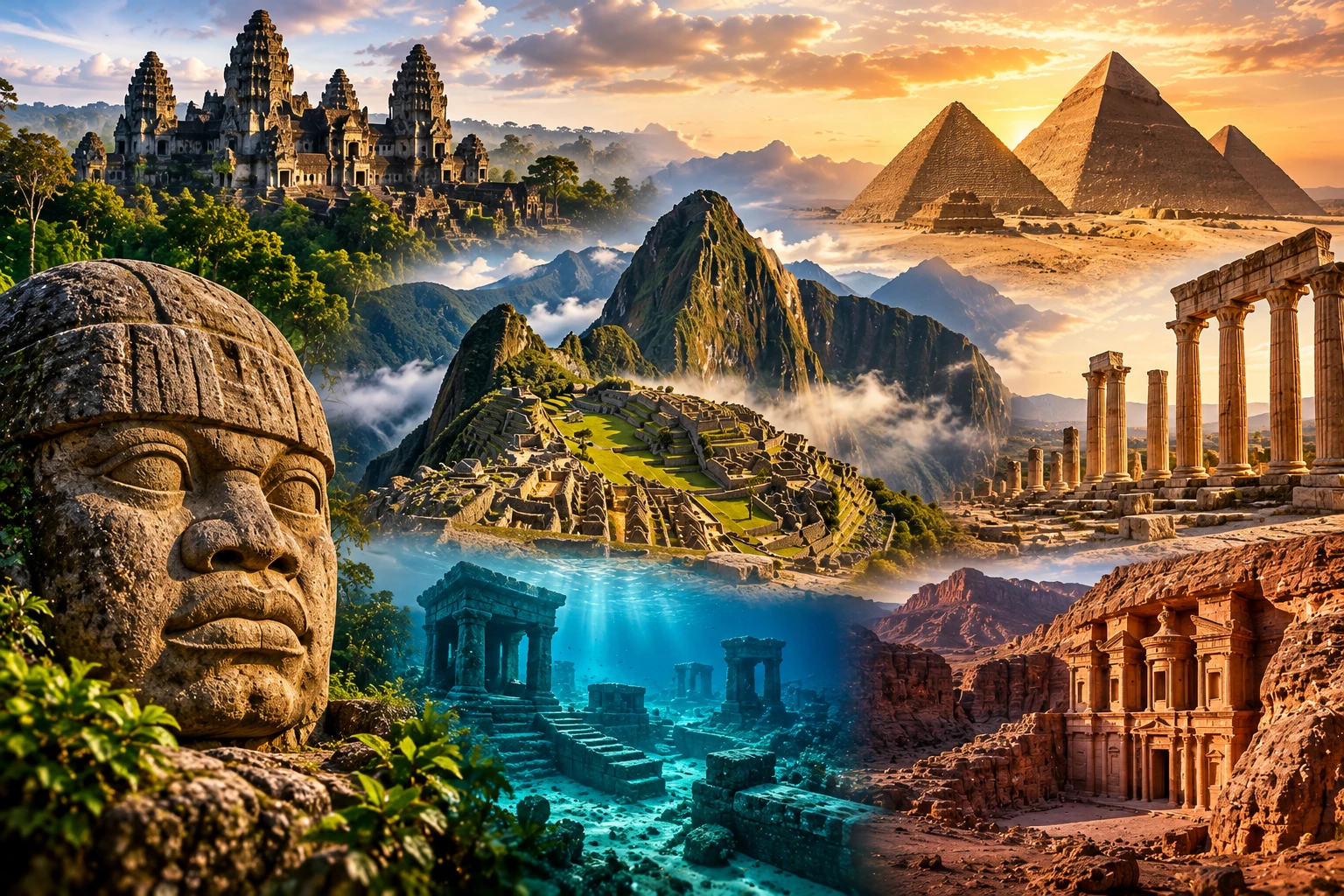
Throughout history, powerful civilizations have built magnificent cities, developed advanced technologies, and created cultural traditions that influenced generations. Yet some societies eventually declined, leaving behind abandoned settlements, mysterious ruins, and unanswered questions about their final years. Archaeologists have uncovered valuable evidence, but in several cases, the exact reasons for their decline remain debated. Here are ten ancient civilizations whose stories continue to fascinate historians and researchers.
1. The Indus Valley Civilization
The Indus Valley Civilization flourished around 2600–1900 BCE across parts of present-day Pakistan and northwestern India. Cities such as Harappa and Mohenjo-daro featured organized streets, drainage systems, and carefully planned buildings.
However, many urban centers gradually declined, and large-scale urban life changed significantly. Researchers have suggested that shifting river systems, changing monsoon patterns, economic changes, and the transformation of trade networks contributed to the decline. The Indus script remains undeciphered, making it difficult to understand the civilization’s political structure and historical records fully.
2. The Maya Civilization
The ancient Maya developed impressive cities, sophisticated calendars, mathematical systems, and monumental architecture in Mesoamerica.
During the ninth century CE, many major Maya cities in the southern lowlands experienced significant population decline and political collapse. Researchers have identified possible contributing factors, including prolonged droughts, warfare, environmental pressures, and political instability.
However, Maya civilization did not completely disappear. Maya communities continued to thrive, and millions of Maya people live across Central America today.
3. The Ancestral Puebloans
The Ancestral Puebloans built remarkable settlements across the southwestern United States, including the famous cliff dwellings at Mesa Verde.
Around the late thirteenth century, many communities in the Mesa Verde region were abandoned. Extended drought, changing environmental conditions, social tensions, and migration may have influenced these movements.
Their descendants continued living in other communities, particularly among modern Pueblo peoples. The mystery concerns why particular settlements were abandoned and how environmental and social pressures interacted.
4. The Minoan Civilization
The Minoans flourished on Crete during the Bronze Age and were known for elaborate palaces, colorful artwork, and extensive maritime connections.
Their civilization experienced major disruptions during the second millennium BCE. The eruption of Thera, now Santorini, may have caused tsunamis and other regional disturbances. Earthquakes, trade disruption, and later Mycenaean influence may also have contributed to political changes.
Researchers continue to investigate how much the volcanic eruption directly contributed to the decline of Minoan palatial society.
5. The Hittite Empire
The Hittites established a powerful empire in Anatolia, centered around their capital at Hattusa, during the second millennium BCE.
Around 1200 BCE, the empire’s political system collapsed during a period of widespread disruption across the eastern Mediterranean. Possible explanations include warfare, internal political problems, food shortages, population movements, and disruptions to trade.
Because several civilizations experienced difficulties during this period, historians debate whether the Hittite collapse resulted from one major event or a combination of interconnected problems.
6. The Nabataean Civilization
The Nabataeans developed a prosperous kingdom based on trade routes connecting Arabia, the Mediterranean, and other regions. Their capital, Petra, became famous for monumental buildings carved into sandstone cliffs.
Petra gradually lost some of its importance as trade networks changed and Roman administration expanded. Earthquakes and changing economic conditions may also have affected the city.
The Nabataean population did not simply vanish; instead, communities were gradually integrated into wider regional societies.
7. The Olmec Civilization
The Olmec flourished along the Gulf Coast of present-day Mexico from approximately 1500 to 400 BCE. They are known for enormous stone heads, ceremonial centers, and artistic traditions that influenced later Mesoamerican cultures.
Important centers such as San Lorenzo and La Venta eventually declined. Environmental changes, shifts in political power, internal conflicts, or changing settlement patterns may have contributed.
The limited surviving written evidence makes it difficult to reconstruct exactly how Olmec political institutions changed over time.
8. The Mycenaean Civilization
The Mycenaeans built fortified palaces across mainland Greece during the Late Bronze Age. Their society was known for military organization, trade, and an early form of Greek writing called Linear B.
Around 1200 BCE, many palace centers were destroyed or abandoned. Possible causes include warfare, earthquakes, political instability, economic disruption, and wider regional collapse.
The relative importance of each factor remains debated, and different Mycenaean settlements may have experienced different outcomes.
9. The Kingdom of Aksum
Aksum became a major trading power in the Horn of Africa during the first millennium CE. Its merchants connected African, Arabian, and Mediterranean markets, while monumental stone stelae reflected its political influence.
Over time, Aksum’s international importance declined. Changes in trade networks, environmental pressures, political developments, and regional economic shifts may have contributed.
Aksumite traditions continued to influence Ethiopian history, so the kingdom’s decline was a transformation rather than the disappearance of its people.
10. The Khmer Empire
The Khmer Empire ruled much of mainland Southeast Asia and constructed Angkor, one of the world’s most impressive historical urban complexes.
During the fifteenth century, Angkor lost its position as the empire’s principal political center. Warfare, changing trade routes, water-management challenges, and environmental pressures have all been investigated as possible factors.
The Khmer population did not disappear, and Cambodian society continued to develop. The continuing question is how these different pressures combined to reshape Angkor and the surrounding region.